Blog
By Mr. Vardan Gupta
Digital Evidence in the Age of AI: Can Courts Trust What They See?
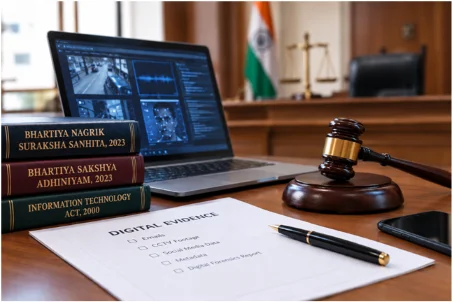
The rapid advancement of Artificial Intelligence (AI) is transforming the way digital evidence is created, collected, analysed and presented before courts. Emails, CCTV recordings, social media posts, call records, location data, photographs and metadata have already become important components of modern investigations. AI now adds a new dimension by enabling investigators to process enormous volumes of digital information, identify patterns and assist in reconstructing events. However, the same technology that strengthens the evidentiary process can also create sophisticated deepfakes, synthetic images, manipulated audio and fabricated videos. This raises a fundamental legal question: when technology can create something that appears completely authentic, how can a court determine whether it is genuine? The age of AI therefore demands a stronger focus on the authenticity, integrity and reliability of digital evidence. Courts, investigators and legal professionals must develop the ability to examine not only what digital evidence shows, but also how it was created, preserved, processed and potentially altered. Proper documentation, secure chain of custody, technological verification and appropriate expert assistance will become increasingly important in ensuring that AI-generated or digitally manipulated material is not mistaken for fact. For law students and future legal professionals, understanding the intersection of AI, technology and evidence is no longer optional—it is an essential part of contemporary legal education. The challenge before the justice system is not simply to embrace technological advancement, but to ensure that innovation continues to serve the fundamental objective of every legal process: discovering the truth while protecting fairness and justice. Digital evidence, artificial intelligence and the contemporary judicial process